
“To our children never quite lost.
To the journey to be made, to find them, in the heart.”
It is with great joy that I present the fourth edition of *Piccoli Principi*, the self-help and psychoeducational book designed to help you navigate perinatal grief and, in the end, blossom anew.
The book *Piccoli Principi* is a self-help and psychoeducational resource designed to help people cope with perinatal bereavement; it is intended for women and couples, as well as for family members and friends of those who are grieving.
In our country, it is still difficult to talk about perinatal bereavement because it is a taboo subject: people who have not experienced bereavement firsthand do not always understand the full complexity of perinatal bereavement and are unable to comprehend the needs of those who are going through it.
*Piccoli Principi* can therefore serve as a good starting point for understanding what perinatal grief is and how it is processed: Over the years, Piccoli Principi has enabled healthcare professionals, grandparents, employers, family members, and friends to interact with grieving women and couples in a more respectful, competent, and effective manner.
Although it serves as a valuable resource for professionals, family members, and friends, *Piccoli Principi* is primarily conceived and written as a self-help and psychoeducational book for women and couples experiencing grief: it is addressed specifically to them, with the goal of ensuring they are not left alone in a society that does not recognize perinatal grief and does not facilitate the grieving process.
Little Princes: A book that addresses perinatal grief directly with those who are experiencing it.
Perinatal bereavement is the complex, psychic, physical and social experience that people go through when they lose an expected child, either during pregnancy or after birth.
Grief can manifest itself in many forms: as emotional pain, physical pain, “relational pain,” or—more often—in a chaotic mix of all three, which alternate with one another.
Contrary to what is commonly believed in our culture, the intensity of grief is not influenced by the gestational age of the lost child, the child’s health or illness, or whether or not the pregnancy was terminated for medical, maternal, or fetal reasons.
The intensity of grief depends on the bond that the woman and the couple have formed with that child, which is subjective, personal, and not open to judgment.
The first edition of *Piccoli Principi* was published in 2007: 32 pages bound in a sugar-paper-colored cover, aimed at those who were coping with the loss of a child during pregnancy or after birth and were experiencing the emotional, physical, and social anguish of perinatal bereavement.
Those 32 pages already covered all the experiences that can lead to perinatal bereavement: spontaneous abortion, abortion due to maternal or fetal pathology, intrauterine death, death after birth, the loss of one or more twins and embryo reduction, the death of a prematurely born infant, and even loss during the course of medically assisted reproduction, including the often-overlooked grief resulting from an embryo failing to implant after transfer.
Different lives, different medical histories, and different families are nonetheless united by the intimate experience of grief, which—despite all their differences—manifests itself in its own ways and follows its own rules for processing.
*Little Princes* describes the nuances of perinatal grief, the similarities and differences in various reactions to loss, focusing in particular on the ways and “rules” of the grieving process. These ways and “rules” stem from our nature as mammals: we have a mammalian brain that promotes attachment to offspring and the development of primary care, starting as early as pregnancy. Our brain is very good at registering the absence of a child who was once there but is no longer, and it takes a long time to put all the pieces back together after a loss. Instead,how we behave after bereavement is largely shaped by the culture of our historical era and our society, as well as by how we learned within our families to cope with experiences of loss.
Unfortunately, the psychological processes by which mammals cope with grief often clash with cultural influences, causing further suffering for women and couples who are grieving.
An example of this clash between “nature” and “culture”:
The grieving process for perinatal loss takes many months, often more than a year; yet our culture expects that after two months, we should be ready to put it behind us and forget: forget that we were pregnant, forget that we longed for that child, forget that we lost him or her, and forget the blood that was shed.
This conflict between the time we would need to properly process our grief and the time allowed by our careless society is a well-known obstacle for many people experiencing perinatal bereavement.
Forgetting is never the key to working through grief, as Saint-Exupéry also reminds us in *The Little Prince*:
You will look at the stars, the night. It’s too small for me to show you where it is
MY STAR. It is better that way. My star will be for you one of the stars. So, all the stars, you
Will enjoy looking at them… All of them, they will be your friends. And then I want to give you a gift…”
“When you look at the sky, at night, since I will dwell in one of them, since I will laugh.
in one of them, then it will be for you as if all the stars are laughing. You will have, you alone, stars
Who can laugh!”
“And when you have consoled yourself (there is always consolation), you will be happy to have met me.
you will always be my friend. You will feel like laughing with me. And you will open the window sometimes, like this,
for pleasure… And your friends will be amazed to see you laughing while looking at the sky.
Antoine de Saint Exupéry, The Little Prince
“And when you’ve found comfort (we always do)”— I clung to these words right from the start— “you’ll be glad you met me.” *Piccoli Principi* was born from that: from the certainty that, after the pain, it’s possible to rediscover that joy of having met one another, of having waited for one another. *Piccoli Principi* was written with the conviction that all the effort it takes to get through grief is worth it, so that we can rediscover that spark of joy brought by our children, intact and shining brightly.
Because that remains, and death cannot take it away. Now I know that. When I was writing the first words of *The Little Prince*, I didn’t know it—I was just hoping it was true.
The first edition of *Piccoli Principi* had a powder-blue cover and the CiaoLapo logo, which I had drawn by hand. The second edition had a yellow cover; it was laid out by a graphic designer and included some additional reflections on perinatal bereavement. The third edition featured a cover with dandelions, 98 pages, many personal accounts, and two important themes: perinatal bereavement among fathers and other children in the family.
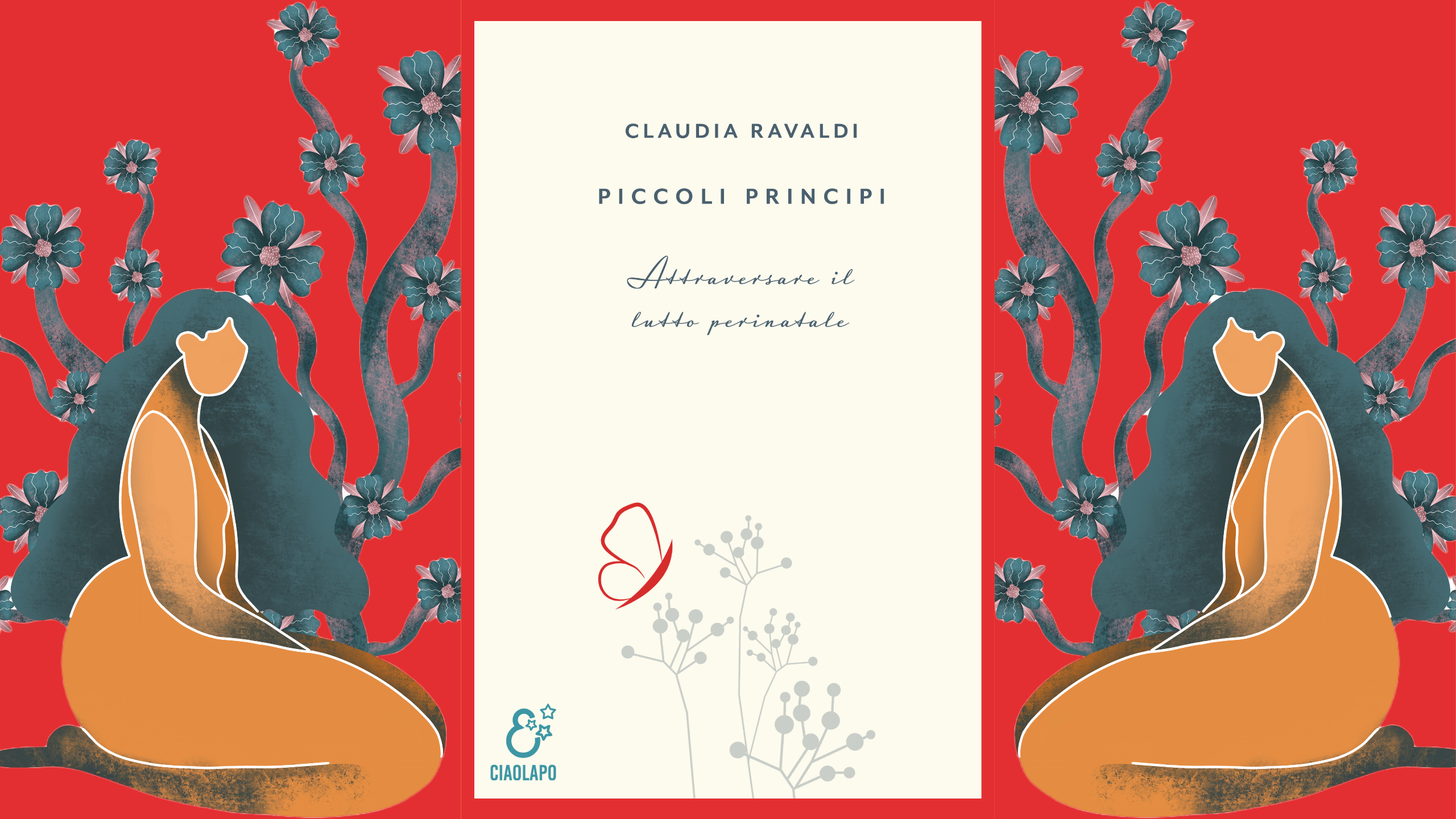
The fourth edition of *Piccoli Principi* is twice as long: it’s 183 pages, the cover features a red butterfly resting on a wild carrot flower, and it’s structured like a journey: the focus begins with returning home empty-handed and continues from there, with a detailed description of the steps to take in order to prepare for the grieving process.
In the fourth edition, all the chapters have been rewritten and expanded with new personal accounts, and two new chapters address the topics of sexuality and spirituality after bereavement.
From 2007 to 2022, we donated 15,000 copies of *The Little Prince* to hospitals and family planning clinics so that women and couples would not feel alone and at the mercy of their grief.
When I came home from the hospital, I was holding your book really tight… The other women were leaving the maternity ward with their little ones in their arms… Not me… But I wasn’t empty-handed.
I had your book. It meant so much to me. It was the only thing I had in the midst of all my despair.
Like the previous editions, the fourth edition of *Piccoli Principi* will also be donated to hospitals participating in the Memory Box project. Each year, the project donates 1,000 support kits—Memory Boxes—to hospital wards that work with CiaoLapo to promote respectful support for perinatal bereavement.
The fourth edition of *Piccoli Principi* is published by CiaoLapo Edizioni in partnership with Amazon: you can buy your copy here
The book is also available as an ebook.